Treatment of Demodex Blepharitis
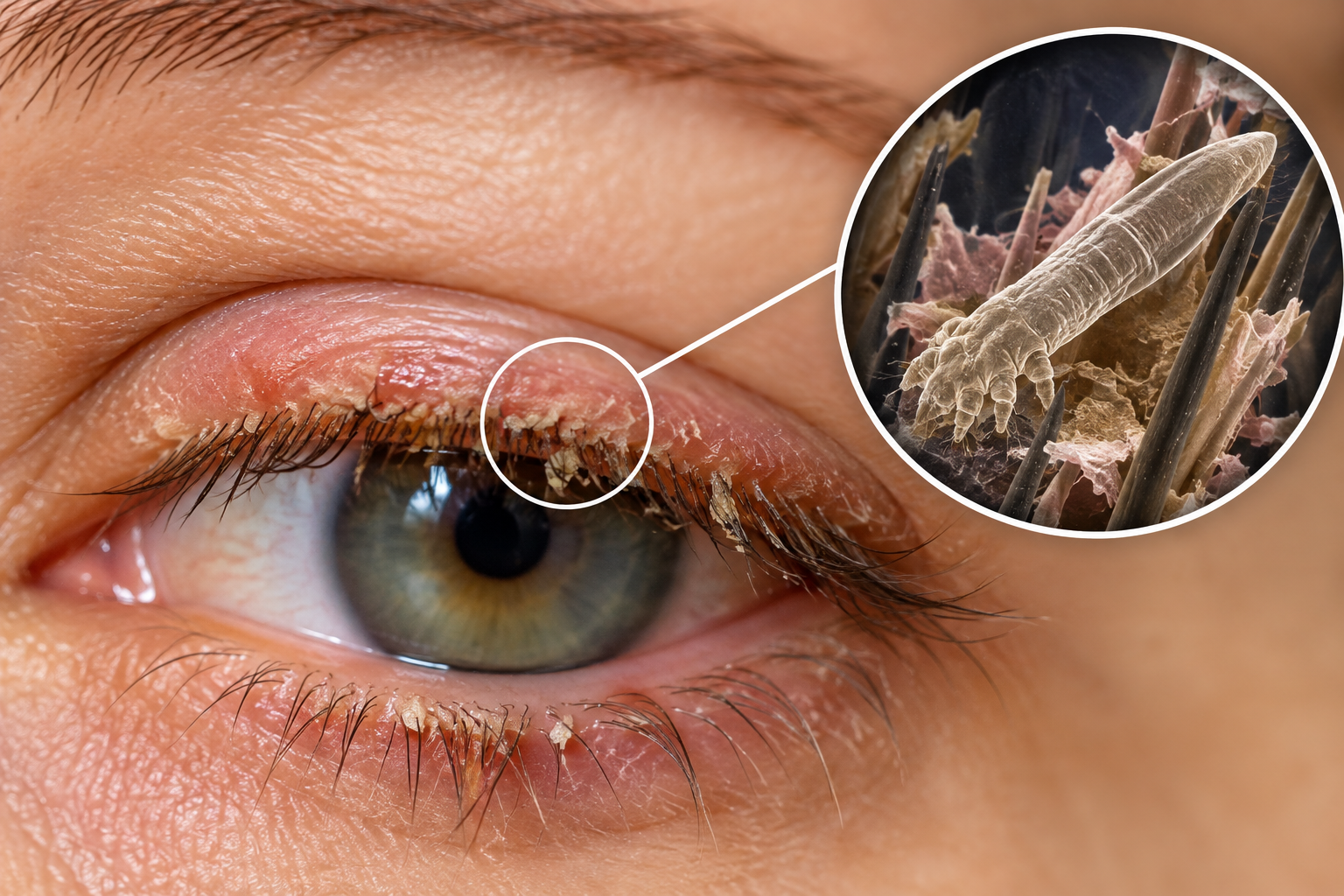
Demodex blepharitis is a chronic inflammatory condition of the eyelid margin caused by infestation with Demodex mites, primarily Demodex folliculorum and Demodex brevis. Effective management requires both eradication of the mites and control of associated inflammation.
1. Lid Hygiene and Mechanical Debridement
The cornerstone of treatment is meticulous eyelid hygiene. Daily mechanical debridement of the lid margin and lashes helps remove mites, their eggs, and debris.
Techniques include:
- Lid scrubs using commercially available cleansers containing PHMBG, tea tree oil (TTO) or terpinen-4-ol, which have demonstrated acaricidal activity.
- Manual removal of cylindrical dandruff and collarettes with a cotton-tipped applicator or microblepharoexfoliation devices.
- Warm compresses to loosen crusts and scales.
2. Topical Therapies
- Tea Tree Oil (TTO): Lid scrubs with 50% TTO in-office, followed by daily at-home maintenance with lower concentrations (5–10%), have shown efficacy in reducing mite counts and improving symptoms.
- Terpinen-4-ol: As the active component of TTO, terpinen-4-ol is available in some commercial lid hygiene products and may be better tolerated.
- Other Agents: Hypochlorous acid solutions and certain over-the-counter cleansers may provide adjunctive benefit, though their direct effect on Demodex is less established.
3. In-Office Procedures
- Microblepharoexfoliation: Devices such as BlephEx® can be used in-office to mechanically exfoliate the lid margin, removing biofilm and debris, and improving patient comfort.
- Intense Pulsed Light (IPL): Emerging evidence suggests IPL may reduce Demodex populations and improve meibomian gland function in select patients.
4. Pharmacologic Therapy
- Topical Ivermectin: Off-label use of topical ivermectin 1% cream applied to the eyelid margin has shown promise in reducing mite burden and inflammation.
- Oral Ivermectin: In refractory or severe cases, a single or repeated dose of oral ivermectin may be considered, though evidence is limited and safety profiles should be reviewed.
5. Adjunctive Measures
- Artificial Tears: To address associated dry eye symptoms.
- Antibiotic or Steroid Drops: Short courses may be used to control secondary bacterial infection or significant inflammation, but are not directly effective against Demodex.
6. Management of Facial Rosacea to Prevent Recurrence
There is a well-established association between facial rosacea and Demodex infestation. Rosacea creates a favorable environment for Demodex proliferation, and untreated facial rosacea can serve as a reservoir for reinfestation of the eyelids. Addressing facial rosacea is therefore critical in preventing recurrence of Demodex blepharitis.
Topical Therapies:
- Metronidazole cream or gel and azelaic acid are first-line agents for papulopustular rosacea.
- Topical ivermectin 1% cream is effective for both facial Demodex and rosacea, and may be used in conjunction with eyelid therapy.
- Brimonidine gel or oxymetazoline cream can be considered for persistent facial erythema.
Oral Therapies:
- Doxycycline (sub-antimicrobial dose) is commonly used for moderate to severe rosacea, especially when ocular involvement is present.
- Oral ivermectin may be considered in refractory cases with high Demodex burden.
- Lifestyle and Skin Care:
- Advise patients to avoid known rosacea triggers such as heat, spicy foods, alcohol, and sun exposure.
- Recommend gentle skin care routines, non-comedogenic moisturizers, and daily sunscreen use.
- Procedural Interventions:
- Intense Pulsed Light (IPL) and laser therapy may be beneficial for persistent telangiectasia and erythema.
7. Patient Education and Follow-Up
Educating patients about the chronic and recurrent nature of Demodex blepharitis and its association with facial rosacea is essential. Emphasize the importance of ongoing lid hygiene, consistent rosacea management, and regular follow-up to monitor response and adjust therapy as needed.
Successful management of Demodex blepharitis requires a multifaceted approach, combining mechanical, topical, and occasionally systemic therapies. Addressing coexisting facial rosacea is essential to reduce the risk of recurrence and optimize long-term outcomes. Early recognition and consistent treatment can significantly improve patient comfort and ocular surface health.
Call to schedule an appointment with Dr. Vale to learn more about our various treatment options.
📲 1-877-520-3937
Comments are closed